Aquatic Vegetation Services in Saskatchewan
Aquatic Vegetation Services in Saskatchewan
Mechanical phragmites, lake weed, dredging, and shoreline services across Saskatchewan.
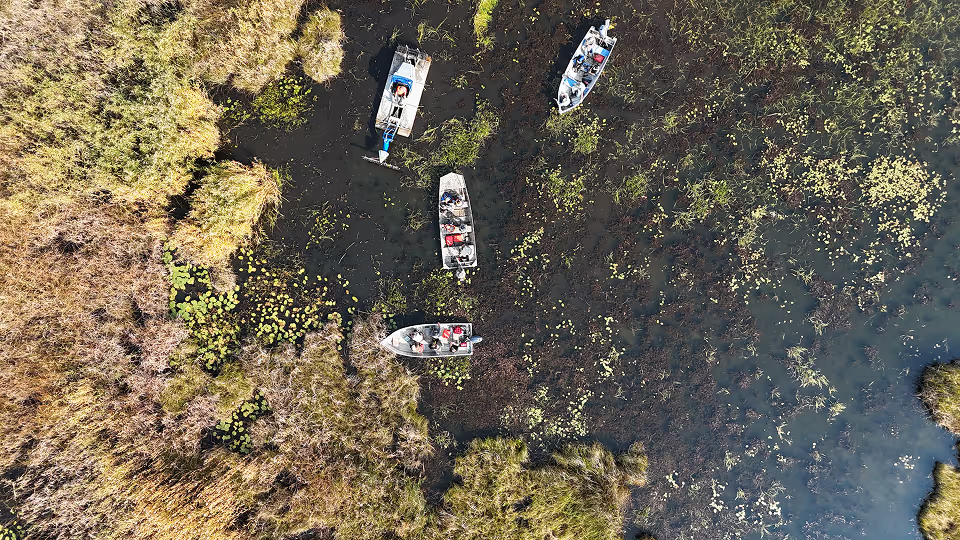
Seahorse provides aquatic vegetation harvesting, phragmites and cattail removal, duckweed and algae removal, suction dredging, aquatic rototilling, and shoreline work for Saskatchewan municipalities, lakefront properties, resort communities, private ponds, marinas, lagoons, and managed waterbodies.
Family-Operated • 15+ Years of Experience • Fully Insured • Canada’s Official Truxor Dealer • Municipal & Private Projects • Serving BC, AB, SK & MB
Dense emergent vegetation and aquatic weeds are putting pressure on Saskatchewan lakes, wetlands, and drainage areas.
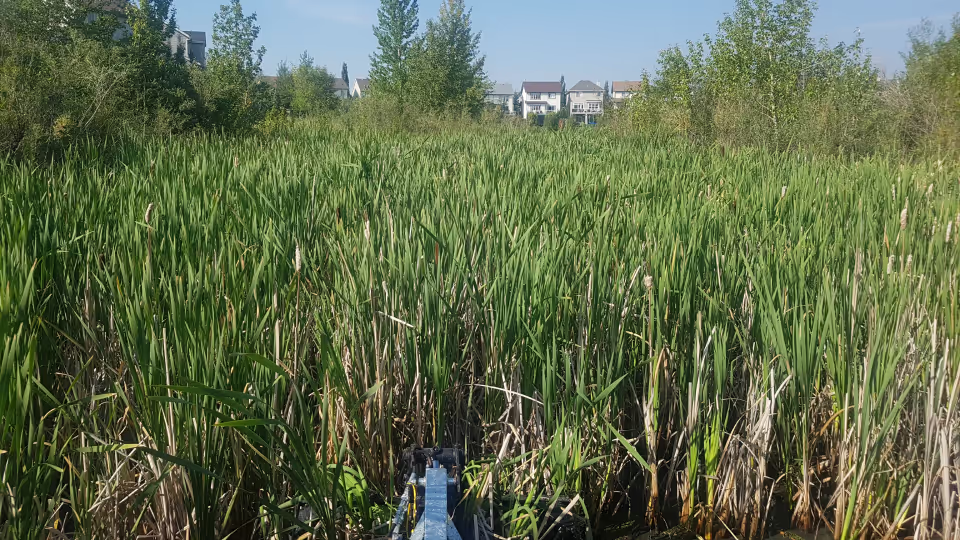
Saskatchewan’s lakes, wetlands, resort communities, and prairie drainage corridors support native aquatic vegetation that provides fish habitat, shoreline protection, and water-quality benefits. But when vegetation becomes too dense or spreads into the wrong areas, it can block access, restrict flow, reduce open water, and create ongoing maintenance problems.
Invasive phragmites, dense cattails, reeds, and other emergent vegetation can be especially difficult to manage because they spread through root and rhizome systems below the surface. Surface cutting alone may not be enough where regrowth pressure is high. In those situations, mechanical cutting paired with subsurface rototilling may help disturb the root zone and extend the results of removal.
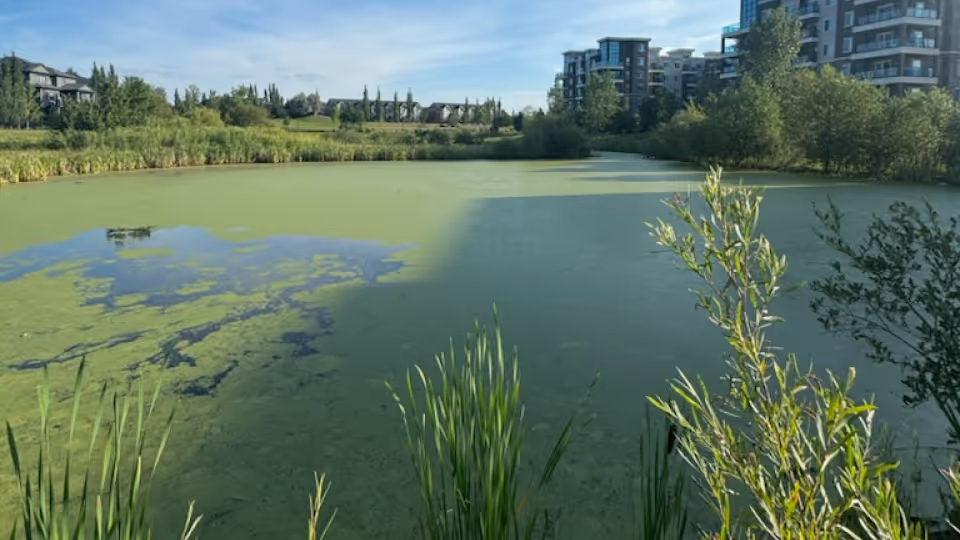
Eurasian watermilfoil, dense cattails, algae, duckweed, and other aquatic vegetation can also affect Saskatchewan lakes, ponds, lagoons, and drainage areas. Seahorse can help assess the site and recommend the right mechanical approach for the vegetation present.

Plan ahead for Saskatchewan permits.
Most work in or near water - including aquatic or riparian vegetation removal - requires an Aquatic Habitat Protection Permit from the Water Security Agency. Review can take up to 45 business days, so early planning matters.
Aquatic vegetation and waterbody services available in Saskatchewan.
Every Saskatchewan site is different. Seahorse can recommend the right service based on vegetation type, waterbody conditions, access, permit requirements, and long-term maintenance goals.



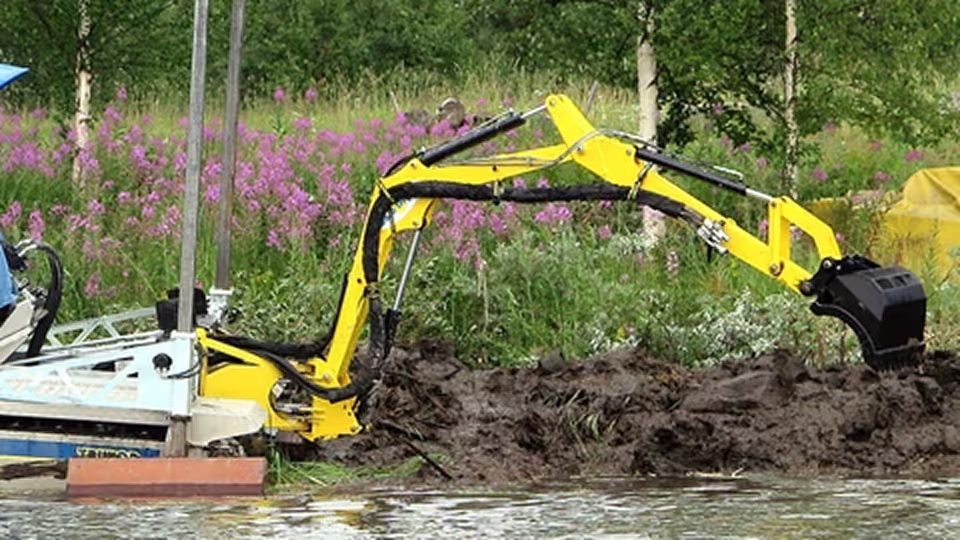
Serving Saskatchewan municipalities, property owners, and marinas.


Plan permits before in-water or shoreline work begins.
In Saskatchewan, work in or near water often requires an Aquatic Habitat Protection Permit from the Water Security Agency. Permit requirements can apply when removing vegetation in or near water, clearing channels, or undertaking work that affects aquatic habitat.
Permit applications are reviewed by the Water Security Agency, and review may take up to 45 business days depending on application volume, project scope, and whether the application is complete. Early planning is especially important for seasonal lake, marina, lagoon, or drainage work.
Chemical control is handled differently. Saskatchewan has a separate permit process for chemical control of aquatic nuisances in or near surface water, while Seahorse focuses on chemical-free mechanical methods.
Vegetation Type
Phragmites, aquatic weeds, cattails, reeds, duckweed, algae, Eurasian watermilfoil, or shoreline overgrowth.
Waterbody Type
Lake lot, private pond, municipal lagoon, stormwater pond, resort community lake, drainage channel, or public waterbody.
Access and Staging
Shoreline access, soft ground, launch points, equipment movement, water depth, seasonal timing, and disposal areas.
Approval Considerations
Aquatic Habitat Protection Permit, Water Security Agency review, project scope, seasonal timing, fish habitat considerations, and disposal requirements.
Need phragmites removal, lake weed management, or waterbody services in Saskatchewan?
Tell us where the site is, what is growing or building up, and what you need the waterbody to do. Seahorse will review the project and recommend the right mechanical solution - and help identify what permits may be needed before work begins.
FAQs
Some of the most frequently asked questions our team receives. Feel free to reach out with any other questions, our team would love to answer them.
Yes, it usually does. The Water Security Agency requires an Aquatic Habitat Protection Permit for many types of work in or near water, including aquatic or riparian vegetation removal. Review can take up to 45 business days, so early planning is important.
Yes. Seahorse can assess dense phragmites, cattails, reeds, and other emergent vegetation along shorelines, drainage areas, wetland edges, and lake communities. Depending on site conditions and approvals, mechanical cutting and aquatic rototilling may be recommended to help manage regrowth from root and rhizome systems.
Yes. Mechanical work in or near water generally requires an Aquatic Habitat Protection Permit. Chemical control of aquatic nuisances in or near surface water has a separate permit process. Seahorse focuses on chemical-free mechanical methods.
Yes. Seahorse works with Saskatchewan municipalities on wastewater lagoons, stormwater ponds, drainage areas, inlets, outlets, and public waterbody maintenance.
Include the nearest community or lake, waterbody type, photos of the issue, what vegetation or buildup is present, access details, and what you need the waterbody to do.
Seahorse can review projects across Saskatchewan, including Qu'Appelle Valley and Last Mountain Lake resort communities, municipal sites, private properties, rural acreages, and managed waterbodies. Availability depends on location, access, project scope, timing, and equipment requirements.