Cattail Removal Across Western Canada
Cattail Removal Across Western Canada
Cattail removal for shorelines, ponds, lagoons, and drainage areas.
Seahorse provides chemical-free cattail, phragmites, reed, and bulrush removal for municipalities, lakefront properties, private ponds, stormwater ponds, wastewater lagoons, and waterways across BC, Alberta, Saskatchewan, and Manitoba.
Family-Operated • 15+ Years of Experience • Fully Insured • Canada’s Official Truxor Dealer • Municipal & Private Projects • Serving BC, AB, SK & MB
What is cattail removal?
Cattail removal is the mechanical cutting, clearing, and extraction of dense emergent vegetation from shorelines, pond edges, lagoon cells, drainage areas, and shallow water zones. It is used to manage cattails, phragmites, reeds, bulrushes, and similar shoreline growth that affects access, flow, visibility, maintenance, or waterbody function.
Unlike general weed harvesting, cattail removal often deals with thick rooted stands along the water’s edge. Depending on the site, Seahorse may recommend mechanical cutting, extraction, removal, and follow-up aquatic rototilling to help disturb root systems and reduce regrowth pressure.
Note: Some sites may require a combined approach, such as cattail removal followed by aquatic rototilling, vegetation harvesting, dredging, or shoreline excavation.
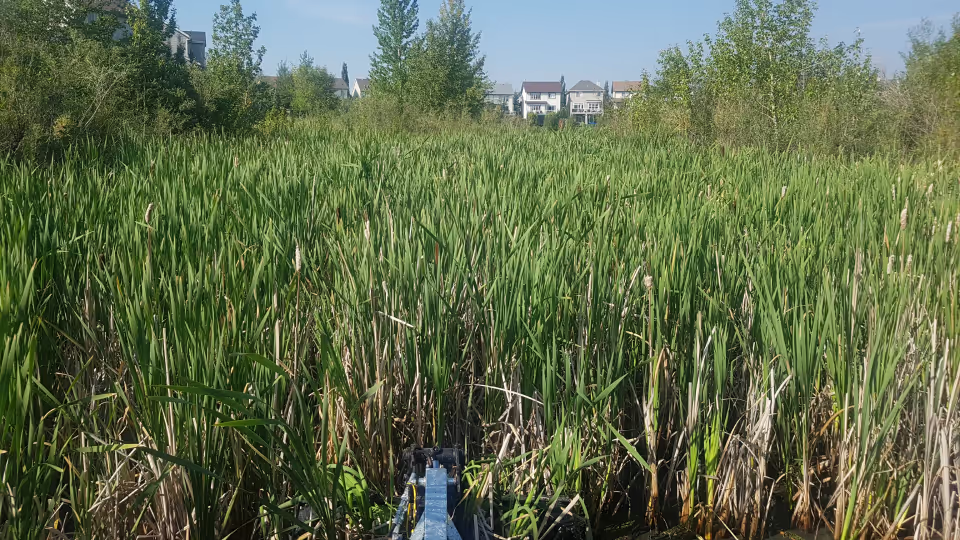
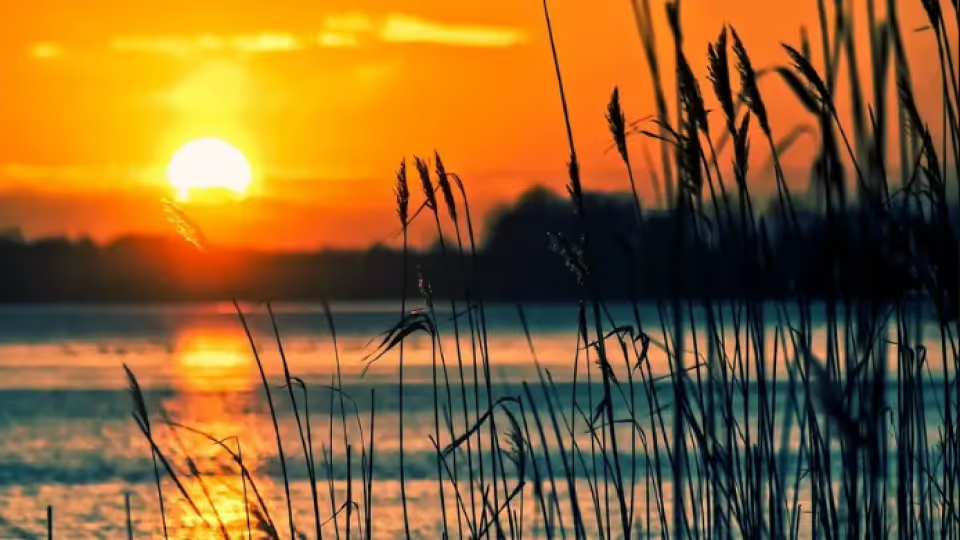
Dense cattails can quickly take over shorelines and shallow water areas.
Cattails, phragmites, reeds, and bulrushes can spread through shallow water, pond edges, lagoon cells, drainage channels, and shorelines. Left unmanaged, they can block access, restrict visibility, slow water movement, interfere with maintenance, and create dense organic buildup along the water’s edge.
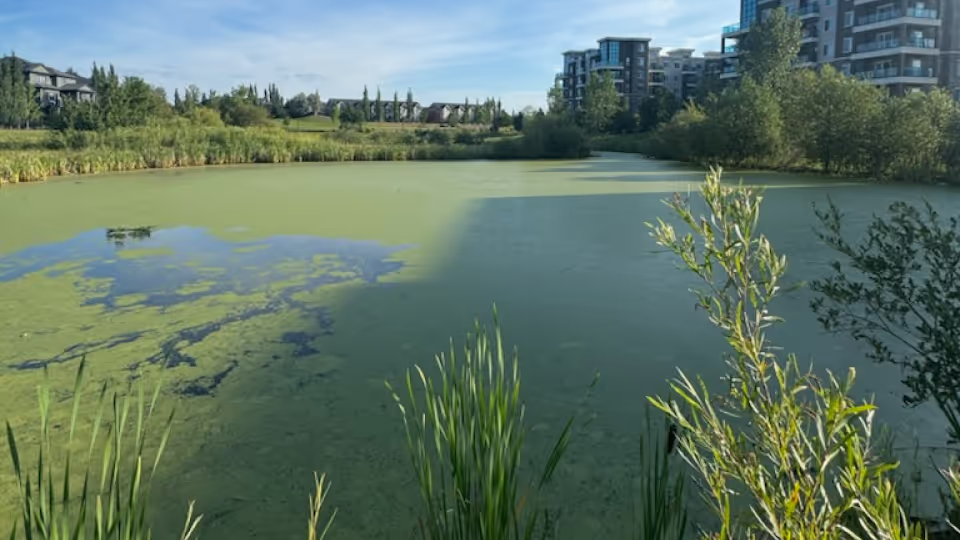
For property owners, that can mean a shoreline that's harder to use, swim, or maintain. For municipalities, it can mean plugged inlets and outlets, reduced lagoon performance, blocked drainage, and the organic buildup that contributes to odour and H₂S concerns in wastewater systems.

The key difference: addressing what's below the surface.
Cutting cattails alone doesn't stop them. Their dense rhizome network regrows aggressively from below. Mechanical removal paired with follow-up rototilling disturbs the root zone, making regrowth more manageable instead of inevitable.
Benefits of Cattail Removal
A chemical-free way to restore shoreline access, flow, and maintainability.
Restores Shoreline Access
Open up lake lots, pond edges, lagoon cells, drainage areas, docks, and shallow-water access points.
Restores Drainage Flow
Cattails crowd inlets, outlets, ditches, and drainage areas where they slow or block water movement at critical infrastructure points.
Reduces Regrowth Pressure
Cattails regrow from rhizome networks below the surface. Mechanical removal paired with follow-up rototilling can disturb the root zone and make recurring growth more manageable.
Visible Same-Day Progress
Mechanical cattail removal clears standing growth as the work is completed, instead of waiting weeks for treated stands to die back and slowly break down in place.
Equipment for Cattail Removal
Built to cut and clear dense shoreline vegetation.
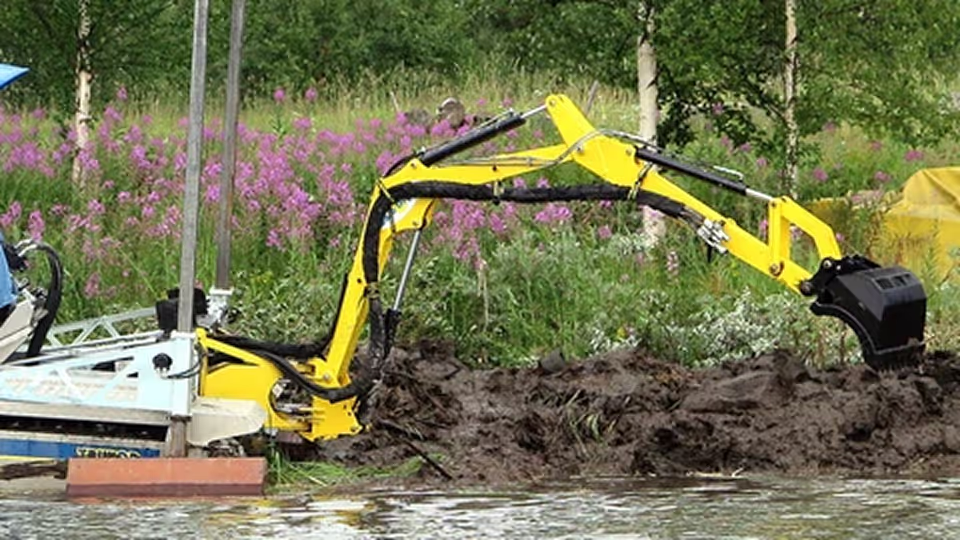
Seahorse uses Truxor amphibious equipment fitted with cutting and vegetation-removal attachments suited for cattails, phragmites, reeds, bulrushes, and other emergent shoreline growth. These attachments allow crews to work along wet edges, shallow water, soft shorelines, and overgrown areas where conventional equipment may not be practical.
Emergent vegetation cutting
Cuts dense cattails, phragmites, reeds, and bulrushes growing above the waterline or through shallow water.
Shoreline and shallow-water access
Amphibious equipment can work along wet banks, pond edges, lagoon cells, and soft shoreline areas.
Follow-up root disturbance
Where appropriate, aquatic rototilling can be used after cutting to disturb root systems and help extend the results.

Need a more targeted solution?
Some cattail-heavy sites need more than cutting alone. Seahorse can recommend the right combination based on vegetation density, water depth, access, and long-term maintenance goals.



Need cattails removed from a shoreline, pond, lagoon, or drainage area?
Tell us where cattails are growing, how they are affecting access or flow, and what you need the waterbody to do. Seahorse will assess the site and recommend the right mechanical removal approach.
For best results, plan cattail removal before dense seasonal growth becomes harder to access or manage.
FAQs
Some of the most frequently asked questions our team receives. Feel free to reach out with any other questions, our team would love to answer them.
Cattail removal is the mechanical cutting, clearing, and removal of cattails, reeds, bulrushes, and similar emergent vegetation from shorelines, ponds, lagoons, drainage areas, and shallow water zones.
Yes. Seahorse focuses on mechanical removal rather than herbicide-first treatment.
Yes, cattails can regrow from remaining root systems and rhizomes. For recurring cattail issues, Seahorse may recommend follow-up aquatic rototilling or seasonal maintenance.
Yes. Cattail removal is suitable for municipal lagoons, stormwater ponds, drainage areas, inlets, outlets, and managed waterbodies where vegetation affects access, flow, or maintenance.
Removed cattails and vegetation need to be properly handled once they are removed from the waterbody. Seahorse manages that as part of the service - typically through composting facilities or, where suitable, agricultural application, depending on site conditions and applicable regulations.
Seahorse provides cattail removal for shorelines, lake lots, private ponds, dugouts, stormwater retention ponds, wastewater lagoons, drainage channels, municipal waterbodies, and public waterways across Western Canada.