Aquatic Vegetation Services in Alberta
Aquatic Vegetation Services in Alberta
Mechanical lake weed, cattail, dredging, and shoreline services across Alberta.
Seahorse provides aquatic vegetation harvesting, cattail removal, duckweed and algae removal, suction dredging, aquatic rototilling, and shoreline work for Alberta municipalities, lakefront properties, private ponds, marinas, lagoons, and managed waterbodies.

Family-Operated • 15+ Years of Experience • Fully Insured • Canada’s Official Truxor Dealer • Municipal & Private Projects • Serving BC, AB, SK & MB
Aquatic vegetation work in Alberta needs the right balance.
Aquatic vegetation is part of a healthy lake ecosystem. It provides habitat, helps protect shorelines from erosion, supports young fish and wildlife, and helps filter runoff entering the waterbody. Alberta’s lake-health material also warns that removing too much aquatic vegetation can make lakes more vulnerable to water quality problems, including blue-green algae blooms.
In Alberta, cattails are one of the most common vegetation management challenges. Native to the province and ecologically useful at the right density, cattails can spread through dense root and rhizome networks in shallow, nutrient-rich waterbodies - expanding into lagoon cells, lake lot frontage, drainage channels, and stormwater ponds where they restrict flow, block access, and create ongoing maintenance problems. Duckweed, algae, flowering rush, and other aquatic and shoreline vegetation can also affect Alberta waterbodies depending on the site.
When vegetation grows into the wrong place, becomes too dense, blocks access, or creates maintenance issues, Seahorse helps Alberta clients manage those problem areas with specialized amphibious equipment and a practical understanding of waterbody conditions.

Responsible removal matters.
In Alberta, work that disturbs the bed, shore, vegetation, or aquatic environment often requires authorization under the Public Lands Act and/or Water Act. Seahorse can help review the project context and recommend the right mechanical approach before work begins.
Aquatic vegetation and waterbody services available in Alberta.
Every Alberta site is different. Seahorse can recommend the right service based on vegetation type, waterbody use, access, approvals, site conditions, and long-term maintenance goals.

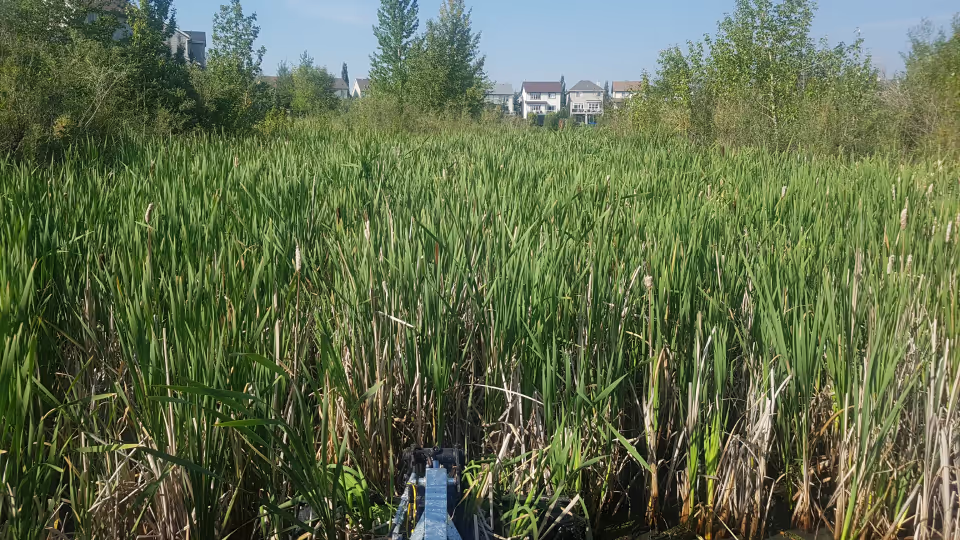
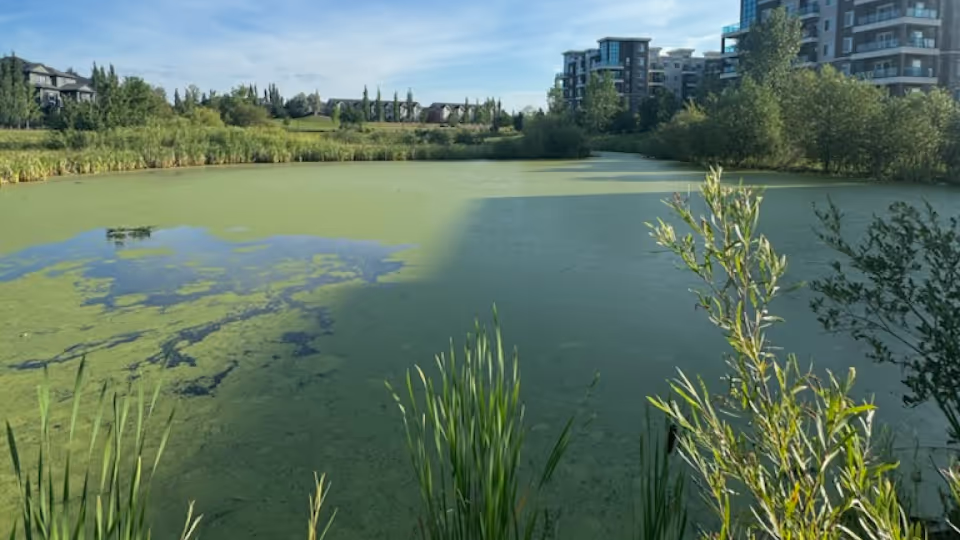


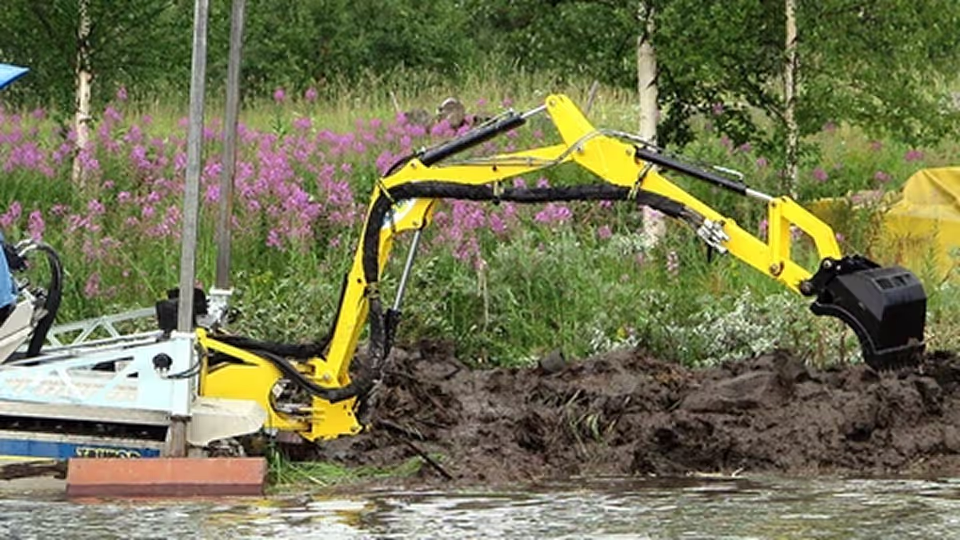
Serving Alberta municipalities, private properties, and marinas.


Plan the work before disturbing the shoreline or waterbody.
In Alberta, lake and shoreline work often requires provincial authorization before equipment enters the water or disturbs the bed, shore, vegetation, or aquatic environment. Alberta’s shorelands guidance says work in and around a water body generally requires approvals under the Public Lands Act and Water Act, and lists aquatic vegetation control, dredging, excavation, and lakeshore vegetation management among activities that may require authorization depending on scope.
Depending on the activity, approvals may involve a Temporary Field Authorization under the Public Lands Act and/or a Water Act approval. Alberta notes that Water Act applications can be submitted through the Environmental Approvals System OneStop portal. Seahorse can help clients understand what approvals may apply before work begins.
Vegetation Type
Aquatic weeds, cattails, phragmites, reeds, bulrushes, duckweed, algae, or shoreline overgrowth.
Waterbody Type
Lake lot, private pond, municipal lagoon, stormwater pond, marina, drainage channel, or public waterbody.
Access and Staging
Shoreline access, soft ground, launch points, equipment movement, water depth, and disposal areas.
Approval Considerations
Temporary Field Authorization, Water Act applications, project scope, timing restrictions, fish habitat considerations, and disposal guidelines.
Alberta Government Resources
Official government forms and guidance for aquatic vegetation removal, waterfront activity, and waterbody work in Alberta.
Application for Aquatic Vegetation Harvesting - Lake Lots
The provincial application form for waterfront property owners seeking authorization for aquatic vegetation harvesting at Alberta lake lots. Required under the Water Act for vegetation removal that goes beyond what is permitted under the standard seasonal dock disturbance allowance.
Mooring Structures on Bed and Shore
Alberta's 2025 directive on dock placement, mooring structures, and associated shoreline activities on Crown-owned bed and shore. Covers authorization requirements, vegetation cutting conditions for dock installation, and the standards applicable to waterfront, semi-waterfront, and back lot holders under the Public Lands Act.
Respect Our Lakes: Aquatic Plant Removal
Alberta Environment's 2026 public guide to responsible aquatic plant removal at lake lots and shorelines. Covers what vegetation cutting is permitted without authorization, the ecological importance of aquatic plants, and how to apply for Water Act and Public Lands Act authorizations when additional removal is needed.
Need aquatic vegetation or waterbody work in Alberta?
Tell us where the site is, what is growing or building up, and what you need the waterbody to do. Seahorse will review the project and recommend the right mechanical solution.
FAQs
Some of the most frequently asked questions our team receives. Feel free to reach out with any other questions, our team would love to answer them.
Yes, it often can. Work that affects the bed, shore, vegetation, or aquatic environment may require authorization under Alberta’s Public Lands Act and/or Water Act, depending on the activity and scope.
Yes. Seahorse provides mechanical cattail removal for lake lots, private ponds, stormwater ponds, wastewater lagoons, drainage areas, and shorelines using specialized amphibious equipment. Where recurring cattail growth is a concern, aquatic rototilling may be recommended to help manage root-zone regrowth.
Yes, but prior authorization may be required depending on the activity, location, and amount of disturbance. Alberta’s lakeshore guidance notes that waterfront owners may want to clear aquatic plants for piers, boat lifts, boat lanes, or swimming areas, but aquatic plant control is governed by provincial criteria and guidelines.
Yes. Seahorse works with Alberta municipalities on wastewater lagoons, stormwater ponds, drainage areas, inlets, outlets, and public waterbody maintenance.
Include the nearest community, waterbody type, photos of the issue, what vegetation or buildup is present, access details, and what you need the waterbody to do.
Seahorse can review projects across Alberta, including municipal, private, marina, rural, and managed waterbody sites. Availability depends on location, access, project scope, timing, and equipment requirements.