Aquatic Vegetation Services in Manitoba
Aquatic Vegetation Services in Manitoba
Mechanical duckweed removal, lake weed harvesting, dredging, and shoreline services across Manitoba.
Seahorse provides aquatic vegetation harvesting, duckweed and algae removal, cattail removal, suction dredging, aquatic rototilling, and shoreline work for Manitoba municipalities, lakefront properties, resort communities, private ponds, marinas, lagoons, and managed waterbodies.

Family-Operated • 15+ Years of Experience • Fully Insured • Canada’s Official Truxor Dealer • Municipal & Private Projects • Serving BC, AB, SK & MB
Duckweed and aquatic vegetation are a serious management issue for Manitoba waterbodies.
Manitoba's lakes, wetlands, and managed waterways support important aquatic ecosystems - and they also face some of the most demanding vegetation management requirements of any province in Western Canada.
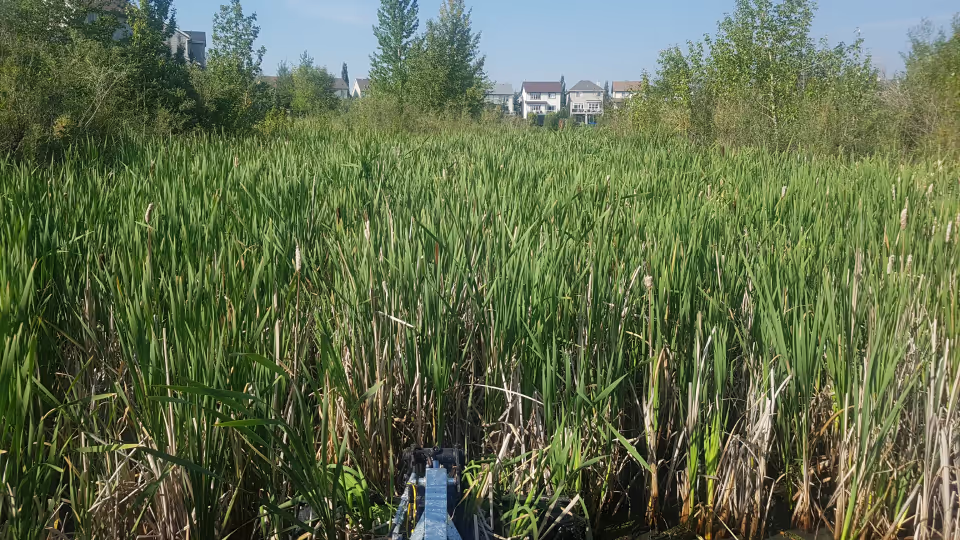
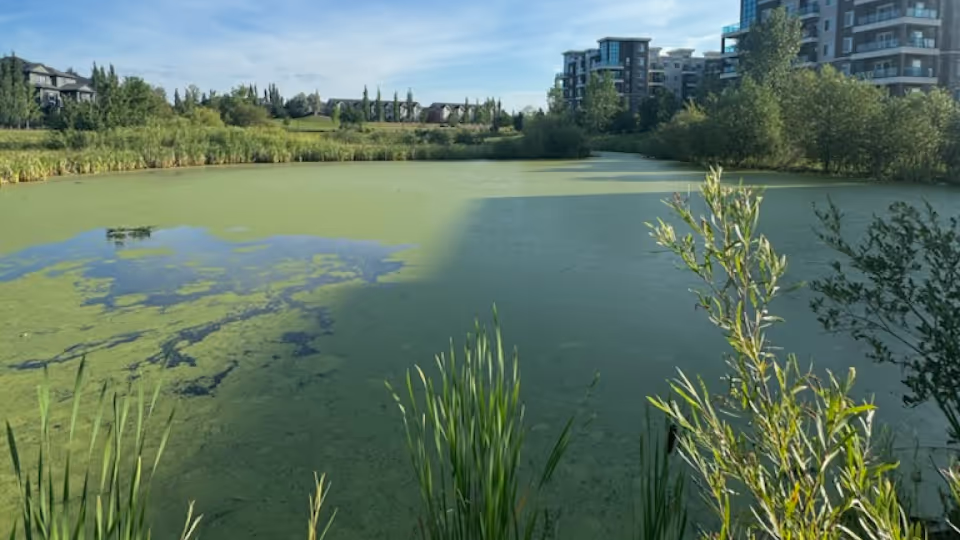
Duckweed is one of the most persistent surface vegetation problems in Manitoba. It forms thick floating mats that can blanket an entire pond, lagoon, or slow-moving waterway within weeks. Those mats cut off wind action and sunlight, reducing the natural oxygen exchange that keeps water healthy. In private ponds, retention basins, and lakefront properties, duckweed affects water quality and usability. In municipal wastewater lagoons, dense duckweed coverage can contribute directly to treatment performance failures, odour issues, and licence non-compliance.
Phragmites, Eurasian watermilfoil, cattails, and other aquatic and riparian vegetation also affect Manitoba waterbodies across the province's lake country, including Lake Winnipeg, Whiteshell, and the cottage communities north of Winnipeg.

Manitoba lagoon licences can require mechanical vegetation control.
Municipal wastewater lagoon licences may require vegetation height control on dykes and annual mechanical removal of reeds, rushes, and trees from lagoon cells. Planning ahead helps municipalities stay aligned with licence conditions.
Aquatic vegetation and waterbody services available in Manitoba.
Every Manitoba site is different. Seahorse can recommend the right service based on vegetation type, waterbody conditions, licence requirements, access, and long-term maintenance goals.



Serving Manitoba municipalities, property owners, and marinas.


Plan lagoon, shoreline, and waterbody work around Manitoba requirements.
In Manitoba, larger waterbody, lagoon, dredging, excavation, or shoreline projects may fall under The Environment Act licensing framework depending on scope and classification. Municipal wastewater lagoons operate under Environment Act licences, and some licences include vegetation-control requirements as part of ongoing operation.
For municipal wastewater lagoons, licence conditions can require vegetation height control on dykes and annual mechanical removal of reeds, rushes, and trees from lagoon cells. Manitoba's Water Protection Act and Aquatic Invasive Species Regulations also apply to aquatic invasive species prevention, transport, and management requirements.
Manitoba announced nearly $400,000 in 2025 through its Aquatic Invasive Species Prevention Fund for AIS prevention, response, and management projects. Some aquatic vegetation or AIS-related management projects may be eligible depending on scope, applicant type, and program criteria.
Seahorse can help clients review what authorization requirements and funding opportunities may apply to their Manitoba project.
Vegetation Type
Duckweed, aquatic weeds, cattails, phragmites, reeds, Eurasian watermilfoil, algae, or shoreline overgrowth.
Waterbody Type
Municipal lagoon, lake lot, private pond, stormwater pond, marina, retention basin, drainage channel, or public waterbody.
Access and Staging
Shoreline access, soft ground, launch points, equipment movement, water depth, seasonal timing, and disposal areas.
Approval Considerations
Environment Act licence conditions, AIS regulations, project scope, lagoon operating requirements, fish habitat timing, disposal requirements, and possible funding eligibility.
Need duckweed removal, lake weed harvesting, or lagoon maintenance services in Manitoba?
Tell us where the site is, what is growing or building up, and what you need the waterbody to do. Seahorse will review the project and recommend the right mechanical solution.
FAQs
Some of the most frequently asked questions our team receives. Feel free to reach out with any other questions, our team would love to answer them.
It depends on the project. Larger in-water, shoreline, dredging, excavation, or lagoon-related work may fall under Manitoba's Environment Act licensing framework depending on scope and classification. Municipal wastewater lagoons operate under Environment Act licences, and some licences include vegetation-control requirements. Seahorse can help review what requirements apply before work begins.
Yes. Seahorse provides mechanical duckweed skimming and surface vegetation removal for Manitoba lagoons, ponds, marinas, retention basins, and lakefront properties using specialized amphibious equipment designed for confined and slow-moving waterbody environments.
Yes. Some Manitoba wastewater lagoon licences require dyke vegetation to be kept below specified heights and require annual mechanical removal of reeds, rushes, and trees from lagoon cells. Exact requirements depend on the facility's licence conditions.
Potentially. Manitoba announced nearly $400,000 in 2025 through its Aquatic Invasive Species Prevention Fund for AIS prevention, response, and management projects. Eligibility depends on the applicant, project scope, and program criteria.
Yes. Seahorse works with Manitoba municipalities on wastewater lagoons, stormwater ponds, drainage areas, and public waterbody maintenance - including facilities operating under Environment Act licence conditions.
Seahorse can review projects across Manitoba, including municipal lagoon sites, Lake Winnipeg and Whiteshell lake communities, private properties, rural ponds, and managed waterbodies. Availability depends on location, access, project scope, timing, and equipment requirements.